

Ask how many photographs belong in a portfolio and you will be told ten to fifteen. It is in every guide, every forum thread and every course. It is repeated with the confidence of a measured fact, and as far as we can tell nobody has ever measured it.
So we counted. Forty-eight working photographers, every portfolio page opened, scrolled to the bottom and counted.
Nine of them are in the ten-to-fifteen range. The median is 23, and more than half show over fifteen.
What 48 Portfolios Actually Contain
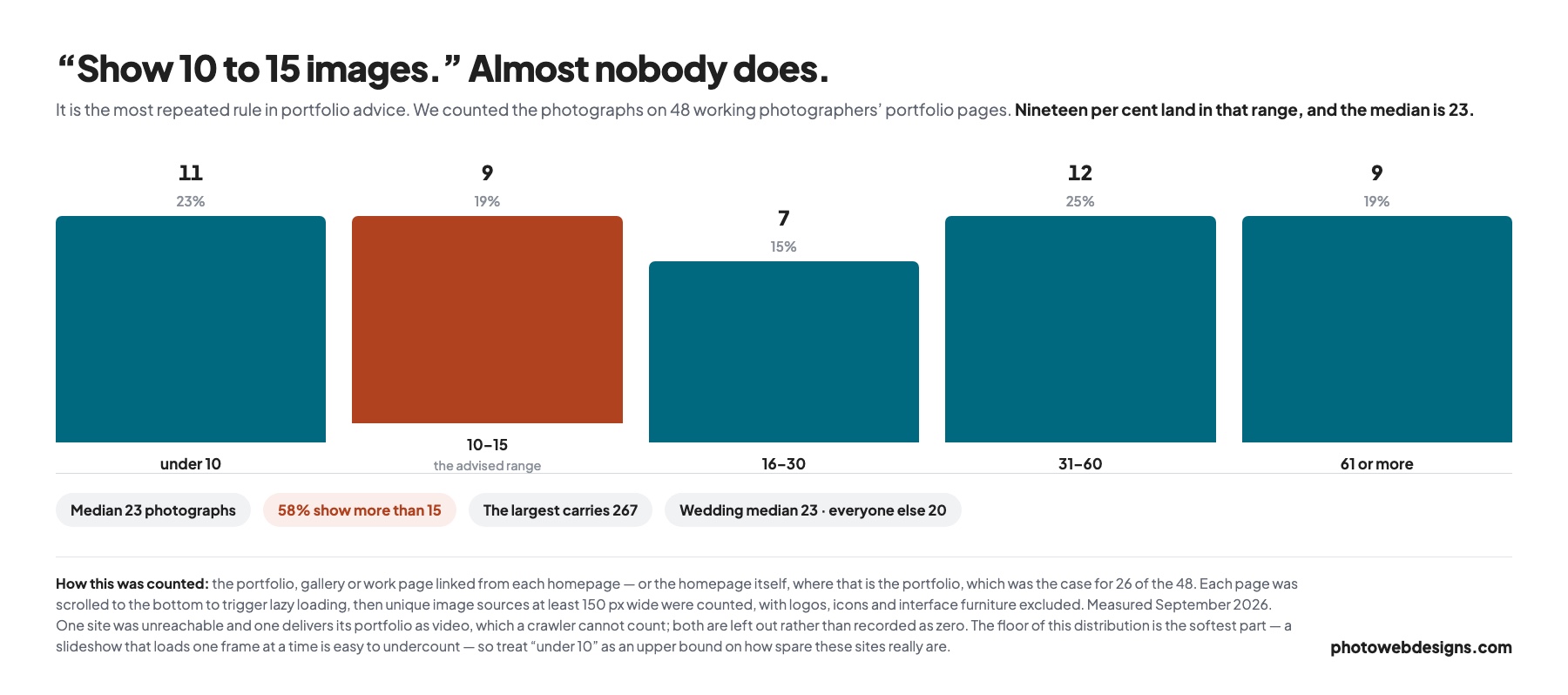
The distribution has no peak where the advice says it should. It has two: a group showing very few images, and a much larger group showing thirty, sixty, a hundred and more. Twelve of the 48 show between 31 and 60 photographs, and nine show more than sixty. The largest carries 267.
That is not a field quietly ignoring good advice. It is a field that split into two strategies, and the ten-to-fifteen rule describes neither of them.
Where The Rule Came From
Ten to fifteen is a good number for a portfolio — the physical book you carry to a meeting, or the PDF an agency asks for. It is about as much as someone will look at while you sit opposite them, and every image has to earn its place because there is no scrolling past.
A website is not that. Nobody is watching you while they browse, there is no cost to the eleventh image beyond a scroll, and the visitor decides when to stop. The advice was carried over from a format with a hard limit into one without, and it never got re-examined.
The Two Strategies That Actually Exist
Few images, chosen hard
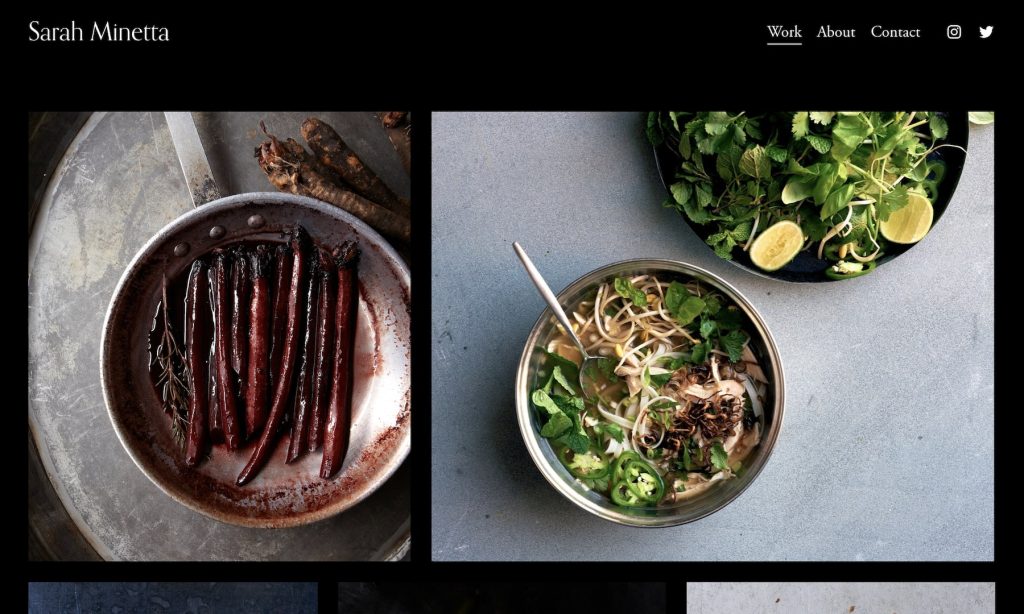
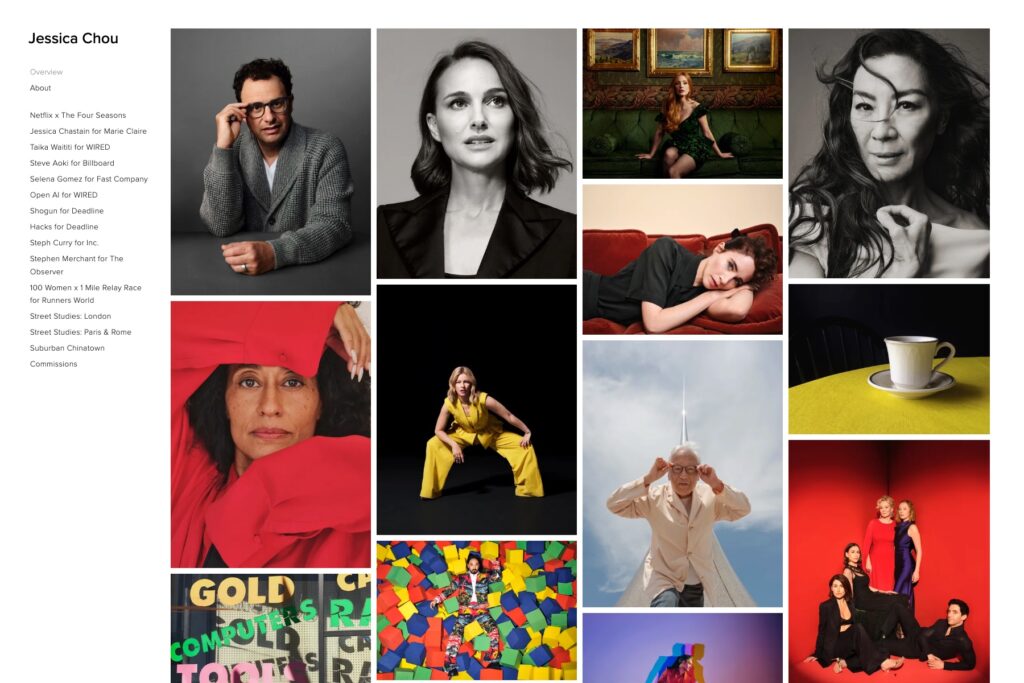
Eleven of the 48 show fewer than ten photographs. These are almost all commercial, editorial and architectural photographers — people hired on judgement rather than volume, whose buyer is an art director looking for a sensibility, not a couple checking you can handle a whole day.
It works when every frame is genuinely exceptional and the buyer already knows the genre. It fails badly when it is really a lack of material dressed up as restraint, because six images cannot demonstrate range.
Many images, organised well
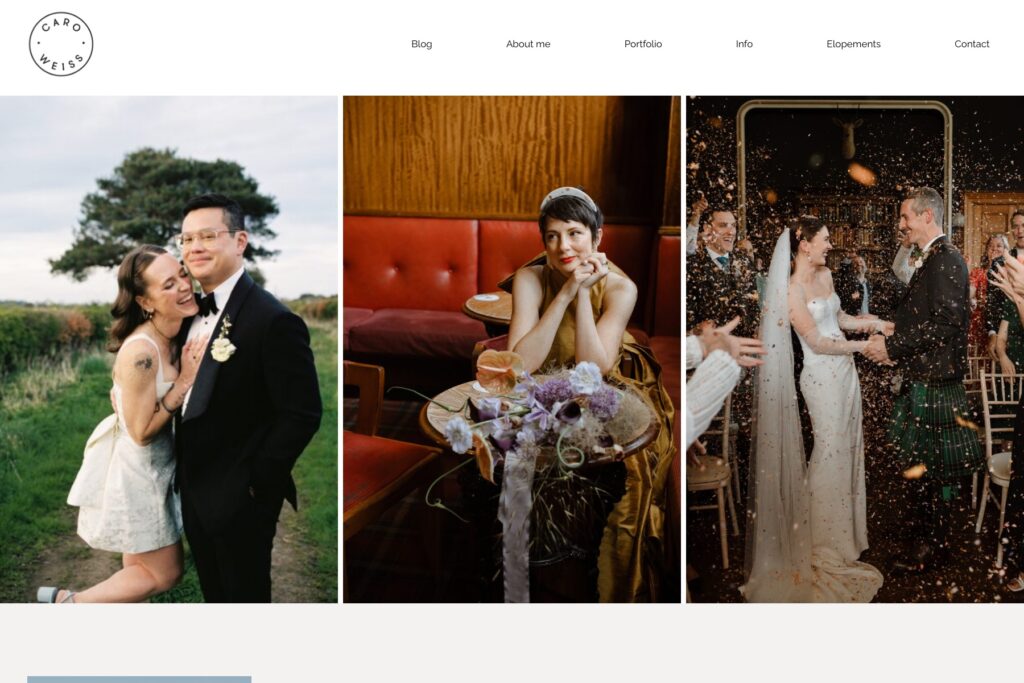
Twenty-one show more than thirty. These skew towards wedding and event work, and the reason is structural rather than aesthetic: a couple is not assessing whether you are talented, they are assessing whether you can do it for twelve hours. Volume is the argument. One perfect frame proves nothing about hour nine.
The wedding median in our sample is 23 against 20 for everyone else — but the wedding photographers are much more likely to be at the very top end, and the ones showing complete weddings rather than highlights are making a deliberate point about consistency.
So How Many Should You Show?
The honest answer is that the number is downstream of a question nobody asks first: what does your buyer need to stop worrying about?
- Hired on taste — editorial, advertising, architecture. The worry is “is this person any good”. Twelve to twenty exceptional frames answers it, and a weak twenty-first actively hurts.
- Hired on reliability — weddings, events, families. The worry is “can they carry a whole day, in bad light, with my difficult relatives”. That needs volume and it needs range: getting ready, ceremony, speeches, dancing, the quiet bits.
- Hired on output — real estate, product, commercial volume. The worry is “can they turn this round on Thursday”. The portfolio is a competence check, and it can be short.
If you shoot weddings and you are showing fifteen images, you are answering the wrong question. If you shoot advertising and you are showing eighty, you are diluting the ones that would have got you hired.
One Thing Everyone Gets Wrong Regardless
Twenty-six of the 48 have no separate portfolio page at all — the homepage is the portfolio. That is a legitimate design decision and it has one consequence worth knowing about.
A homepage doing double duty as a gallery is usually a homepage with almost no words on it. We measured that separately: the median photography homepage carries 160 words, and the ones that are also the portfolio sit at the bottom of that range. It is why so many good photographers are invisible in search — there is nothing on the page to rank, as we covered in why photography websites do not rank.
If your homepage is your portfolio, the fix is not fewer images. It is a paragraph that says what you shoot and where, and captions that name the venue, the client or the city.
How We Counted, And Where It Is Soft
The portfolio, gallery or work page linked from each homepage, or the homepage itself where that is the portfolio. Each page scrolled to the bottom to trigger lazy loading, then unique image sources at least 150 px wide, with logos, icons and interface furniture excluded. September 2026.
The low end is the least reliable part and it is worth being honest about why. A gallery that loads one full-screen frame at a time is easy to undercount, and our first two attempts did exactly that — one site that reads as a single image actually publishes thirty-six, served as small thumbnails. One photographer in the sample delivers the whole portfolio as video, which a crawler cannot count at all; that site is excluded rather than recorded as zero, along with one that would not load. So treat “under 10” as an upper bound, and the median as the sturdier number.
Frequently Asked Questions
How many photos should be in a photography portfolio?
Fewer than you have been told, or many more, depending on what you shoot. The commonly repeated advice is 10–15, but only 9 of the 48 photographers we measured fall in that range and the median is 23. Photographers hired on taste show fewer; wedding and event photographers show far more, because volume is how they prove they can carry a whole day.
Is 10-15 images enough for a photography website?
It is enough if your buyer is assessing your eye — editorial, advertising or architectural work. It is not enough for weddings or events, where the client is trying to work out whether you can deliver consistently across many hours rather than whether you can take one good picture.
How many photos do wedding photographers show?
The wedding photographers in our sample had a median of 23 images on the portfolio page, and they are heavily represented at the top of the range. Several show complete weddings rather than highlight selections, which is a deliberate argument about consistency.
Can a photography portfolio have too many images?
Yes, but the failure is quality rather than quantity. Adding a weaker frame lowers the average impression, and visitors judge you by your worst included image more than your best. The rule is not a count — it is that every image should be one you would be happy to be hired on.
Should my homepage be my portfolio?
Just over half the photographers we measured do exactly that. It looks good, but those homepages carry very little text, which makes them almost impossible to rank in search. If you go that route, add a short paragraph naming what you shoot and where, plus captions.